/GFJ%202027/Logos/GFJ%202027%20Logos/SVG/gfj2027_logo_revwht.svg)
/GFJ%202027/Logos/GFJ%202027%20Logos/PNG/gfj2027_logo_revwht.png?width=1458&height=626&name=gfj2027_logo_revwht.png)
.png?width=300&name=JFF%20blog%20thumbnail%20(1).png)
Korea Ahead of Japan in Embedded Finance and Data Policies... Will Become the North Asian Financial Corridor
Reporter Seo Hye-jin
Posted May 10, 2026. 7:01 AM, Revised May 11, 2026. 4:01 PM
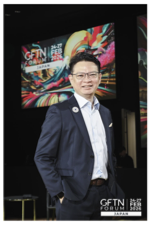
James Boey, CEO of Asia and Europe at Global Finance & Technology Network (GFTN). Photo: GFTN
[Financial News Tokyo Correspondent Seo Hye-jin] "Korea is ahead of Japan in many areas, including technology, data policy, and embedded finance. A new financial cooperation structure connecting Japan, India, Korea, and Taiwan could emerge in the future."
James Boey, CEO of Asia and Europe at Global Finance & Technology Network (GFTN) (pictured), stated this during an interview with Financial News, adding, "We view the North Asia Corridor as important."
GFTN, established under the leadership of the Monetary Authority of Singapore (MAS), is promoting the establishment of an "India-Japan Fintech Corridor" in cooperation with the Financial Services Agency of Japan (JFSA). This structure connects Indian fintech companies with Japanese financial institutions and investors and also includes cooperation between regulatory authorities.
At the 'Black Swan Summit India 2026' held in Bhubaneswar, Odisha, India, in February of this year, a Memorandum of Understanding (MOU) for strategic cooperation was signed with the Startup Policy Forum (SPF), an Indian startup policy organisation.
Mr Boey assessed, "The Japanese financial industry is facing a turning point characterized by the adoption of technology and the expansion of overseas cooperation," adding that "India's rapid scalability can be combined with Japan's structural capabilities." He further noted that "the Korean fintech ecosystem is also an important market," mentioning the potential for cooperation connecting Korea, Japan, India, and Taiwan.
He identified "Quantum Finance" as the next key issue for the financial industry following AI. Mr Boey stated, "When the time comes that supercomputers threaten financial encryption systems, the entire financial infrastructure could be affected," adding that "this is an area the financial sector must prepare for in the long term." The following is a Q&A.
―Specifically, what kind of synergy do you expect?
The key is to combine the strengths of Japan and India. Due to India's large population, fintech companies move very quickly. All solutions must be able to scale rapidly. On the other hand, Japanese companies are highly structured and have strengths in terms of governance, infrastructure, and capital. Additionally, Indian companies have experience adapting quickly even amidst changes in financial regulations. These aspects can be quite interesting factors for Japanese companies. We also view the Global Capability Center (GCC) strategy of Japanese financial institutions as important. The GCC is a structure that transfers some global business operations functions to India. It is a method of managing business operations in the U.S., ASEAN, and Japan from India. India has a rich talent pool and a strong university system. We have already launched fintech and insurtech education programs for graduate and undergraduate students.
―How do you evaluate the Korean market?
Korea is an important market. Korea and Japan share common cultural values and problem-solving approaches. Furthermore, Korea is quite progressive in terms of embedded finance, data policy, and technology investment. The central bank regulatory framework is also very sophisticated. We are already collaborating with the Korea Fintech Support Center. The Korean fintech ecosystem is also actively participating in the Singapore Fintech Festival. Every year, more than 20 to 30 Korean startups and regulatory officials visit. This year, we plan to pursue more full-scale cooperation programmes with Korea. We view the North Asia Corridor as important and see potential for it to connect Japan, India, Korea, and Taiwan.
―What is the most noteworthy change currently being observed in the financial industry?
AI has already deeply permeated the financial industry. At the 'GFTN Forum Japan' held in Tokyo in February, SMBC presented case studies of AI-based digital transformation. AI is being utilized in various fields, including decision-making, call centers, and performance management. AI advisory systems are also expanding in the consumer finance sector. In Singapore, there is even an organisation responsible for the introduction and regulation of AI in the financial sector. Blockchain and DeFi will evolve in a direction that supports the spread of AI.
Personally, I have a special interest in quantum technology. A few years ago, it was expected that the market would invest in both AI and quantum technology, but as AI grew so rapidly, a significant portion of investment in the quantum field shifted to AI. However, that does not mean quantum technology has stopped. It is still quietly developing.
―Why is quantum technology important?
If supercomputers breach financial encryption systems in the future, the entire financial data and authentication system could be shaken. People hardly use cash anymore. Everything operates based on mobile phones and digital authentication. We must consider how to mitigate these risks. That is why GFTN is operating the 'Black Swan Summit' series. The purpose is to prepare for disruptive events that shake the entire society, such as pandemics or financial crises. We are currently preparing a quantum finance research project in collaboration with the University of Western Australia (UWA), HSBC, and others. We are also pursuing participation from IBM. After conducting a pilot project in Perth, Australia this year, we plan to unveil related case studies at the Singapore Fintech Festival. While the market is currently focused on AI and stablecoins, I believe the financial sector must also prepare for quantum risks in the long term.
Reporter Seo Hye-jin (sjmary@fnnews.com)
"韓, 日보다 임베디드 금융·데이터 정책 앞서..북아시아 금융회랑 될 것"[재팬인사이드]
입력2026.05.10. 오전 7:01
수정2026.05.11. 오후 4:01
텍스트 음성 변환 서비스 사용하기
日 자본·인도 확장성 결합 주목
韓 임베디드금융·데이터 정책 강점
다음 금융위협은 AI 아닌 양자기술
제임스 보위 글로벌 금융·기술 네트워크(GFTN) 아시아·유럽 대표. 사진=GFTN
【파이낸셜뉴스 도쿄=서혜진 특파원】"한국은 기술·데이터 정책·임베디드 파이낸스 분야에서 일본보다 앞선 부분이 많다. 향후 일본·인도·한국·대만을 연결하는 새로운 금융 협력 구조가 등장할 수 있다."
제임스 보위 글로벌 금융·기술 네트워크(GFTN) 아시아·유럽 대표( 사진)는 10일 파이낸셜뉴스와 인터뷰에서 "우리는 북아시아 회랑을 중요하게 보고 있다"며 이같이 말했다.
싱가포르 통화청(MAS) 주도로 설립된 GFTN은 일본 금융청(JFSA)과 협력해 '인도-일본 핀테크 회랑(fintech corridor)' 구축을 추진하고 있다. 인도 핀테크 기업과 일본 금융기관·투자자를 연결하고 규제당국 간 협력까지 포함하는 구조다.
올해 2월 인도 오디샤주 부바네스와르에서 열린 '블랙스완 서밋 인디아 2026'에서 인도 스타트업 정책 단체 SPF(Startup Policy Forum)와 전략적 협력 양해각서(MOU)를 체결했다.
보위 대표는 "일본 금융산업은 기술 도입과 해외 협력 확대라는 전환기를 맞고 있다"며 "인도의 빠른 확장성과 일본의 구조적 역량이 결합될 수 있다"고 평가했다. 이어 "한국 핀테크 생태계 역시 중요한 시장"이라며 한국·일본·인도·대만을 연결하는 협력 가능성을 언급했다.
그는 AI 이후 금융산업의 다음 핵심 이슈로 '양자금융(Quantum Finance)'을 지목했다. 보위 대표는 "슈퍼컴퓨터가 금융 암호체계를 위협하는 시점이 오면 금융 인프라 전체가 영향을 받을 수 있다"며 "금융권이 장기적으로 대비해야 할 영역"이라고 말했다. 다음은 일문일답.
―'인도-일본 핀테크 회랑'을 추진하는 이유는 무엇인가.
▶GFTN은 금융 혁신 생태계를 구축하는 조직이다. 우리는 전 세계 여러 시장에서 활동하고 있으며 금융 혁신이 사회적 영향과 글로벌 임팩트를 만들 수 있도록 하는 것이 목표다. 금융 접근성이 낮은 사람들과 소외된 공동체들도 금융기술에 접근할 수 있도록 하고자 한다. 일본에서는 일본 금융청(JFSA)과 협력하고 있다. 일본 금융산업은 지금 전환기를 겪고 있고 금융청 역시 기술 혁신을 받아들이는 방향으로 변화하고 있다. 일본은 지금 그 어느 때보다 해외 투자자와 해외 기업들과 협력하려 하고 있다. 우리는 해외 핀테크 기업들이 일본 시장의 기회를 발견하고 일본 금융기관·기술기업들과 협력할 수 있도록 연결하는 역할을 하고 있다. 지난 3년 간 70여 개국 핀테크 기업과 참석자들을 일본으로 초청했다.
―인도 시장은 어떻게 보고 있나.
▶올해 우리는 인도를 핵심 시장으로 선정했다. 하지만 뭄바이나 델리 같은 1선 도시가 아니라 인도 동부 오디샤 같은 2·3선 지역을 선택했다. 이 지역은 화학·에너지·석유화학 산업뿐 아니라 반도체 산업 역량도 발전시키고 있다. GFTN은 오디샤 주정부와 협력해 핀테크·인슈어테크 허브 구축을 지원하고 있다. 이는 일본 금융기관들을 오디샤로 유치한다는 의미도 있다. 인도와 일본은 이미 강한 양자 관계를 구축하고 있다. 양국 간 교역 규모는 연간 약 200억달러 수준이다. 일본은 자동차·기계·IT 기술 등을, 인도는 석유제품·화학제품·IT 서비스를 수출하고 있다. 일본은 현재까지 인도에 약 300억달러를 투자했고 1400개 이상의 일본 기업이 활동하고 있다. 다만 아직까지는 제조업·산업자동화 분야 비중이 높다. 개인적으로 금융 부문이 앞으로 핵심 투자 영역이 될 수 있다고 본다.
―구체적으로 어떤 시너지를 기대하나.
▶핵심은 일본과 인도의 강점을 결합하는 것이다. 인도는 인구 규모 때문에 핀테크 기업들이 매우 빠르게 움직인다. 모든 솔루션이 빠르게 확장될 수 있어야 한다. 반면 일본 기업들은 매우 구조적이고 거버넌스와 인프라, 자본 측면에서 강점이 있다. 또 인도 기업들은 금융 규제 변화 속에서도 빠르게 적응해온 경험이 있다. 이런 점은 일본 기업들에게 상당히 흥미로운 요소가 될 수 있다. 우리는 일본 금융기관들의 GCC(Global Capability Center) 전략도 중요하게 보고 있다. GCC는 글로벌 사업 운영 기능 일부를 인도로 이전하는 구조다. 미국·아세안·일본 사업 운영을 인도에서 관리하는 방식이다. 인도는 인재 풀이 풍부하고 대학 시스템도 강하다. 우리는 이미 대학원·학부 학생들을 대상으로 핀테크·인슈어테크 교육 프로그램도 시작했다.
―한국 시장은 어떻게 평가하나.
▶한국은 중요한 시장이다. 한국과 일본은 공통된 문화적 가치와 문제 해결 접근 방식을 공유하고 있다. 또 한국은 임베디드 파이낸스(embedded finance), 데이터 정책, 기술 투자 측면에서 상당히 진보적이다. 중앙은행 규제 체계도 매우 정교하다. 우리는 이미 한국 핀테크지원센터와 협력하고 있다. 한국 핀테크 생태계는 싱가포르 핀테크 페스티벌에도 적극 참여하고 있다. 매년 20~30개 이상의 한국 스타트업과 규제기관 관계자들이 방문하고 있다. 올해는 한국과 보다 본격적인 협력 프로그램을 추진할 계획이다. 우리는 북아시아 회랑을 중요하게 보고 있으며 일본·인도·한국·대만까지 연결될 가능성이 있다고 보고 있다.
―현재 금융산업에서 가장 주목하는 변화는 무엇인가.
▶AI는 이미 금융산업에 깊숙이 들어와 있다. 지난 2월 일본 도쿄에서 열린 'GFTN포럼 재팬'에서도 SMBC 측이 AI 기반 디지털 전환 사례를 발표했다. 의사결정, 콜센터, 성과관리 등 다양한 분야에서 AI를 활용하고 있다. 소비자 금융 영역에서도 AI 자문 시스템이 확대되고 있다. 싱가포르에서는 금융 분야 AI 도입과 규제를 담당하는 조직도 있다. 블록체인과 디파이(DeFi)는 AI 확산을 지원하는 방향으로 발전할 것이다.
개인적으로는 양자기술(Quantum)에 특별한 관심을 갖고 있다. 몇 년 전에는 시장이 AI와 양자기술 모두에 투자할 것으로 예상했지만 AI가 너무 빠르게 성장하면서 양자 분야 투자 상당수가 AI로 이동했다. 그렇다고 양자기술이 멈춘 것은 아니다. 지금도 조용히 발전하고 있다.
―왜 양자기술이 중요한가.
▶앞으로 슈퍼컴퓨터가 금융 암호체계를 뚫게 되면 금융 데이터와 인증 시스템 전체가 흔들릴 수 있다. 지금 사람들은 현금을 거의 사용하지 않는다. 모든 것이 휴대폰과 디지털 인증 기반 위에서 움직인다. 우리는 이런 위험을 어떻게 완화할 것인지 고민해야 한다. 그래서 GFTN은 '블랙스완 서밋' 프로젝트를 운영하고 있다. 팬데믹이나 금융위기처럼 사회 전체를 흔드는 파괴적 사건에 대비하자는 취지다. 현재 서호주대학(UWA), HSBC 등과 함께 양자금융 연구 프로젝트를 준비하고 있다. IBM 참여도 추진 중이다. 올해 호주 퍼스에서 파일럿 프로젝트를 진행한 뒤 싱가포르 핀테크 페스티벌에서 관련 사례를 공개할 예정이다. 지금 시장에서는 AI와 스테이블코인 이야기에 관심이 집중돼 있지만 장기적으로 금융권은 양자 리스크에도 대비해야 한다고 본다.
서혜진 기자 (sjmary@fnnews.com)